2026-11-22 ·
How to Prepare Machinery for Transport on Hot Inland Empire Days
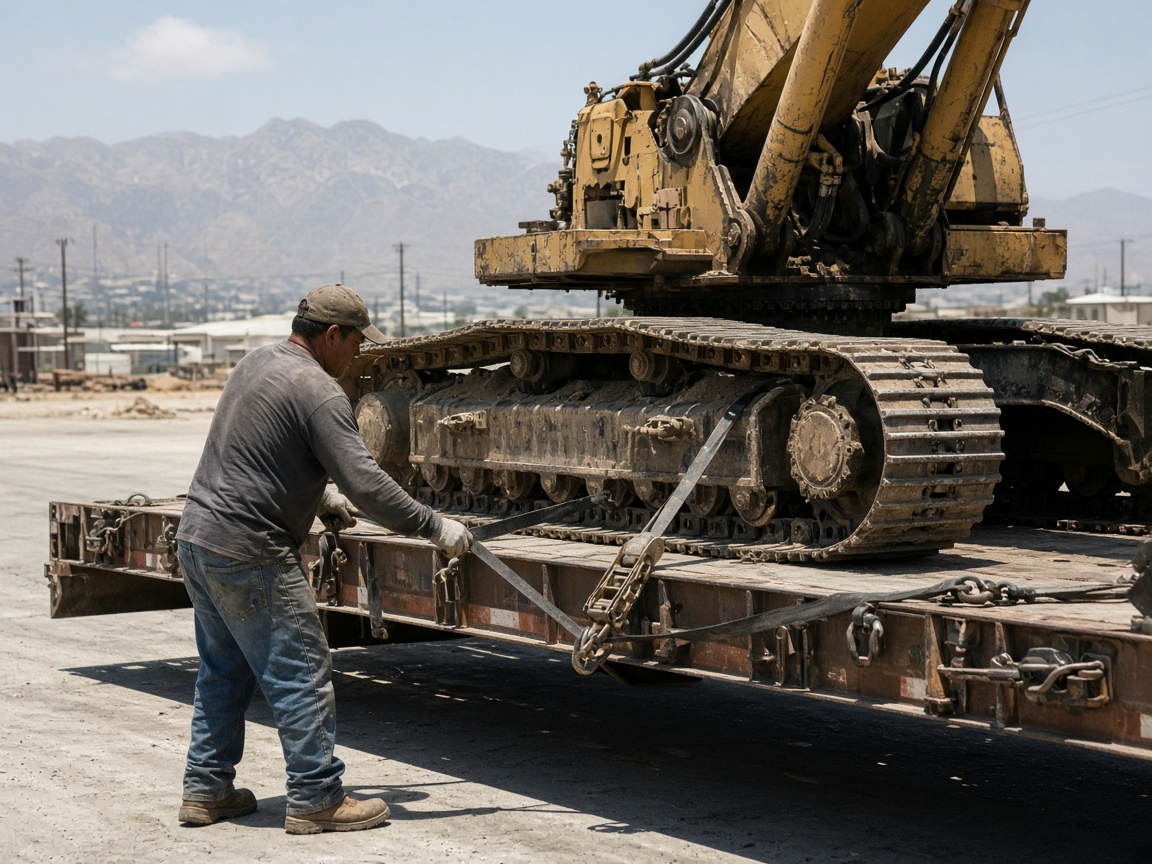
Preparing machinery for transport on hot Inland Empire days begins with a 45-minute pre-load inspection focused on cooling systems and fluid levels to prevent heat-related failures during moves across San Bernardino County. Crews working routes through Downtown San Bernardino or Del Rosa routinely add shade tarps and extra coolant checks because surface temperatures on steel components can exceed 140 degrees by mid-morning. This extra time keeps hydraulic lines from softening and tires from losing pressure on the drive to Highland or Colton.
Inspecting Cooling Systems Before Loading
In the hot desert climate of San Bernardino County, operators start by verifying radiator fins are clear of dust common on Verdemont roads and that coolant concentration matches manufacturer specs for 100-plus degree days. Run the engine at idle for ten minutes while checking for leaks around hoses that expand in heat, then shut down and allow 20 minutes of cooldown before any movement. On jobs near California State University San Bernardino, crews carry spare coolant jugs because local water quality can introduce minerals that reduce cooling efficiency over repeated hauls. Document pressure readings on a simple log so the receiving site knows the machine left in stable condition. These checks directly reduce roadside stops when temperatures climb past 105 degrees in Muscoy industrial zones.
Protecting Hydraulic Lines and Fluids
Hydraulic fluid thins rapidly once ambient temperatures rise above 95 degrees, so drain a small sample from each machine and inspect for aeration or darkening before securing it on the trailer. Replace any filters showing metal particles, especially on excavators that have worked near Glen Helen Regional Park where fine silt enters reservoirs. Route hoses away from exhaust manifolds and wrap exposed sections with heat-resistant sleeves rated for 300 degrees. In Arrowhead neighborhoods with steep grades, lower the boom fully and block cylinders to reduce pressure on seals that soften in prolonged sun exposure. This preparation prevents leaks that strand loads on routes toward Redlands.
Securing Equipment for Heat Expansion and Wind
Chain binders must be checked after the first 30 miles because metal expands and contracts with temperature swings common between morning loads in Del Rosa and afternoon arrivals in Highland. Use edge protectors on straps that contact painted surfaces to avoid melting marks when decks reach 130 degrees. Place machinery so airflow passes through engine compartments rather than trapping heat against cabs during transport on Heavy Equipment Hauling routes. For wider units, confirm tie-down points account for slight frame growth in direct sun. These steps keep loads stable when desert winds pick up through the Cajon Pass corridor.
Final Walk-Around and Scheduling Considerations
Complete a numbered checklist covering lights, mirrors, and tarp tie-downs once the machine sits on the trailer deck, then photograph each connection before departure. Schedule departures before 10 a.m. or after 4 p.m. when possible to avoid peak heat that stresses both equipment and drivers on San Bernardino County roads. The team remains available Mon–Fri 8am–6pm, Sat 9am–2pm for last-minute adjustments when weather forecasts shift. Readers planning similar moves can review Choosing Trailers for Construction Machinery Common in San Bernardino for deck material options that reflect less heat.